

9 Best Coffee Makers for Every Brew Style in 2026
Written by Jordan Silva for joescout.com — research-based kitchen-equipment buying guides, cross-checked against Consumer Reports, CNN Underscored, TechRadar, Reviewed.com, and manufacturer/retailer data rather than personal impressions. See "How We Selected" below for the full methodology and affiliate disclosure.
The US household coffee machine market is valued at $3.47 billion in 2026 and is forecast to reach $4.70 billion by 2031, a 6.30% compound annual growth rate (CAGR). Within that market, single-serve pod machines account for 54.10% of 2025 category revenue, while espresso machines are the fastest-growing segment at 8.62% CAGR (all figures: Mordor Intelligence, Aug 2026) — which means the "best coffee maker" question no longer has one answer; it depends on which brew method actually fits how you drink coffee.
Picking wrong is expensive. A semi-automatic espresso machine and a drip carafe can both cost $150, but they solve completely different problems, and pod convenience carries a real per-cup cost premium over drip.
This guide compares one strong pick per major brew method — drip, semi-automatic espresso, single-serve pod, French press, moka pot, and cold brew — based on published reviews, retailer specs, and market data, not hands-on testing (see "How We Selected" below for the full disclosure).
1. Cuisinart PerfecTemp 14-Cup (DCC-3200) — Best Overall Drip Coffee Maker
The DCC-3200 is Consumer Reports' pick for a mainstream 14-cup drip machine, with testers reporting no discernible flaws in brew performance (Consumer Reports).
Why it's great: A 14-cup glass carafe covers a full household or small office run, the PerfecTemp system is designed to hold brew temperature in the recommended range, and the fully programmable interface lets you set a brew time the night before. At roughly $120, it sits in the middle of the drip price range without giving up capacity.
Best for: Households or small offices that want one carafe to cover multiple cups without babysitting the machine.
Key feature: 24-hour programmable brew start plus an adjustable auto-shutoff, so the carafe isn't left on a hot plate degrading the coffee for hours.
Pricing: ~$120.

2. Cuisinart Coffee on Demand (DCC-3000) — Best Self-Serve Drip Alternative
Also from Cuisinart's PerfecTemp line, the DCC-3000 replaces the open carafe with an internal reservoir and a front dispensing tap, so coffee brews on-demand by the cup instead of sitting on a hot plate.
Why it's great: No pods, no reservoir of coffee slowly stewing on a burner, and no separate carafe to wash — you dispense directly from the machine. Consumer Reports rates it among the better-performing drip models in its lineup.
Best for: Anyone who drinks drip coffee across the day rather than all at once, and wants each cup fresher than an hour-old carafe.
Key feature: Internal thermal reservoir keeps brewed coffee at temperature without a hot plate, which avoids the classic "burnt carafe" taste.
Pricing: $120-$150.
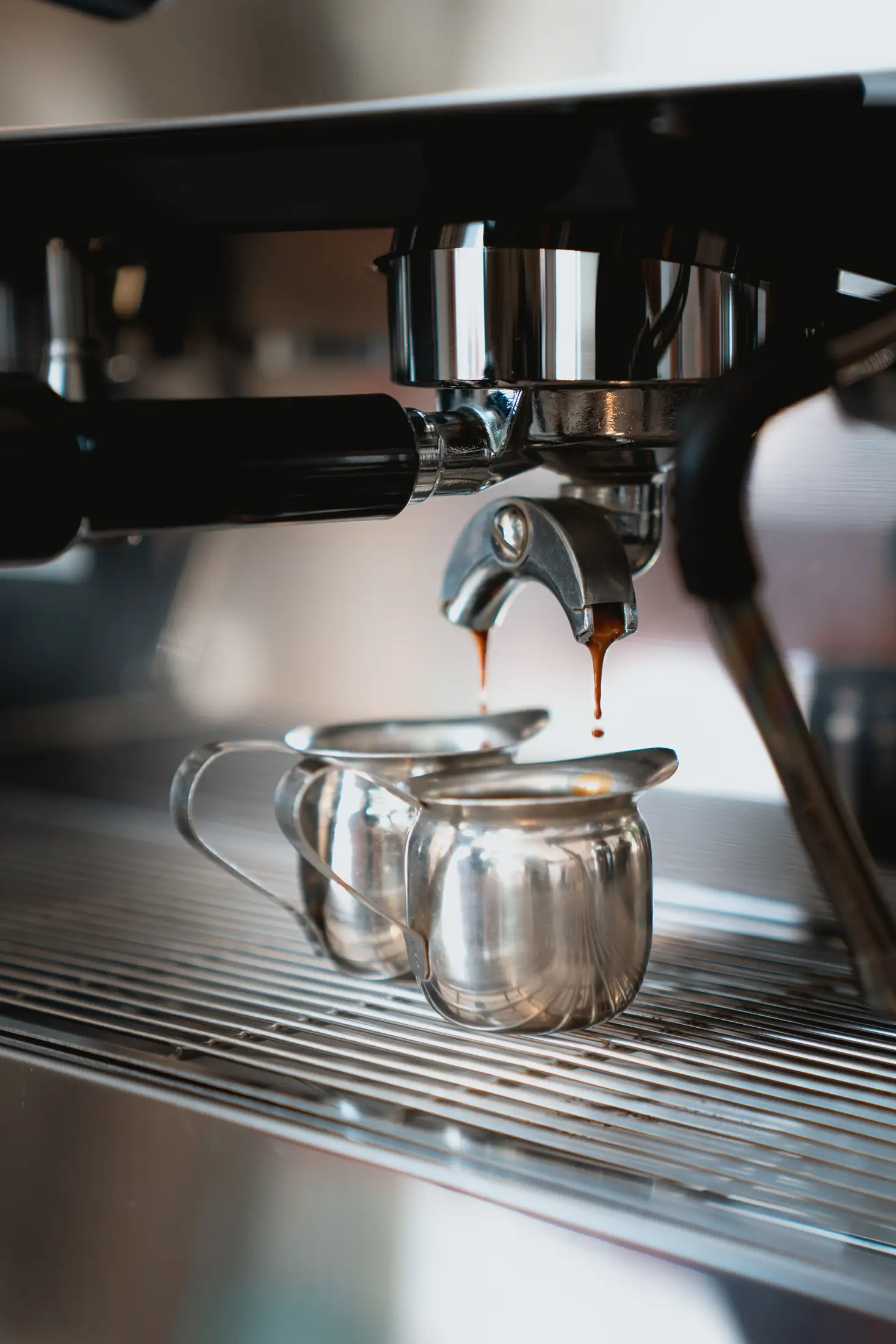
3. Breville Barista Express (BES870XL) — Best Semi-Automatic Espresso Machine
If one product defines "home espresso machine" for a first-time buyer, it's this one: a built-in conical burr grinder, a 54mm portafilter, and a manual steam wand in a single unit with over 26,000 ratings averaging 4.5 stars on Amazon's own listing (Amazon customer reviews).
Why it's great: Grinding, dosing, and pulling a shot all happen on one machine instead of requiring a separate grinder purchase, and the 3-second Thermocoil heating system gets it ready fast enough for a weekday morning. It's widely treated as the reference "gateway" machine into real espresso, as opposed to a pod-based approximation of it.
Best for: Coffee drinkers who want café-quality espresso and milk drinks at home and are willing to learn grind dialing-in, tamping, and steaming — there's a real learning curve here, not a one-button process.
Key feature: Integrated conical burr grinder with dose control, which is normally a $150+ separate purchase on cheaper espresso setups.
Pricing: $449-$700 MSRP, frequently discounted to roughly $500-$630.

4. OXO Good Grips Cold Brew Coffee Maker — Best Cold Brew
Cold brew doesn't use heat or pressure at all — it's a 12-24 hour steep, and the OXO is reviewers' top pick for a sediment-free, consistent concentrate.
Why it's great: The patented "Rainmaker" lid distributes water evenly over the grounds during the steep, which reviewers credit for a cleaner extraction than simply dumping water over grounds in a jar.
Best for: Anyone who wants smooth, low-acid iced coffee concentrate on hand and doesn't mind planning a batch a day ahead — this is a steep-and-wait method, not a same-morning brewer.
Key feature: Built-in filter and a spouted carafe that go straight from steeping to pouring, without transferring the concentrate to a separate container.
Pricing: ~$59.95.
5. Keurig K-Elite — Best Overall Pod / Single-Serve Machine
Consumer Reports names the K-Elite its top pick in the single-serve category, and Keurig as a brand accounted for 74% of all single-serve machines purchased by CR members from 2024 through the first half of 2025 (Consumer Reports).
Why it's great: Five brew sizes, a dedicated iced-coffee setting, and a 75-ounce reservoir mean fewer refills than most single-serve competitors, and the programmable interface removes any daily setup.
Best for: Multi-person households where different people want different cup sizes without any manual adjustment.
Key feature: 75oz removable reservoir — nearly double the capacity of Keurig's budget models — so it doesn't need refilling after every use.
Pricing: Historically ~$150-$170; confirm current retailer price before buying, as pod-machine pricing moves with frequent promotions.

6. Keurig K-Mini — Best Budget Pod Machine
For buyers who just want the cheapest legitimate entry into K-Cup brewing, the K-Mini strips the format down to a single-serve footprint small enough for a dorm room or small kitchen.
Why it's great: Consumer Reports specifically calls out excellent first-cup brew speed on the related K-Mini Mate model, and the price point (often under $70-$100) is the lowest true entry point into the Keurig ecosystem.
Best for: Single-person households, small kitchens, or a secondary coffee maker for a home office or guest room.
Key feature: Compact footprint — among the smallest countertop coffee makers in this guide — at the tradeoff of a smaller water reservoir and fewer brew-size options.
Pricing: Under $70-$100.
7. Nespresso Vertuo Plus — Best for Espresso-Style Pods
Nespresso's Vertuo line uses a patent-protected pod system (protected through roughly 2030, per CNN Underscored's Nespresso roundup) that brews both drip-style coffee and espresso-style shots from the same machine, which is why reviewers consistently name it the best-balanced pick in the pod category.
Why it's great: One machine covers both a full mug and a genuine espresso-style shot with crema, something the Keurig K-Cup format doesn't natively do well.
Best for: Households that want both "big morning mug" and "small strong shot" from a single pod machine, without buying separate equipment.
Key feature: Centrifusion brewing technology, which spins the pod to extract crema similar to pressure-based espresso rather than simple drip-through pod brewing.
Pricing: ~$159-$199 MSRP.
8. Bodum Chambord — Best French Press
The Chambord has been the reference beginner French press for over 50 years: a borosilicate glass carafe in a stainless steel frame with a triple-plunger mesh filter.
Why it's great: No electricity, no pods, no subscription — just hot water, ground coffee, and a four-minute steep. It's also one of the cheapest entries in this entire guide.
Best for: Anyone who wants full control over brew strength without any machine to maintain, or a backup brewing method for power outages and travel.
Key feature: Full-immersion brewing produces a heavier-bodied cup than any filtered method on this list, since more coffee oils pass through the mesh than a paper filter allows.
Pricing: ~$40-$45 depending on size.

A caveat worth naming: Consumer Reports' member reliability survey (covering purchases from 2013 through 2021) rated Bodum's electric drip machines "Poor" for predicted reliability (Consumer Reports, via Yahoo), though that data point is about Bodum's separate electric drip lineup, not the fully manual, motor-free Chambord reviewed here — the two products carry different failure-point profiles.
9. Bialetti Moka Express (6-Cup) — Best Moka Pot
Invented in 1933, the Moka Express is the most recognized stovetop espresso-style maker on the market and remains widely stocked at Target, Walmart, and Williams-Sonoma.
Why it's great: It produces a concentrated, espresso-adjacent cup on any stovetop for a one-time cost under $65, with no electricity and effectively no moving parts to fail.
Best for: Buyers who want a strong, no-frills stovetop brew and don't need milk-drink capability or crema.
Key feature: All-aluminum construction that heats evenly on gas or electric stovetops (check compatibility before buying an induction range — classic aluminum moka pots generally are not induction-compatible without an adapter plate).
Pricing: ~$50-$65.

Cost and Speed Comparison
Feature Comparison Table
| Machine | Best For | Price | Brew Method | Learning Curve | Cost/Cup |
|---|---|---|---|---|---|
| Cuisinart DCC-3200 | Overall drip | ~$120 | Drip, 14-cup carafe | Low | $0.15-$0.46 |
| Cuisinart DCC-3000 | Self-serve drip | ~$120-$150 | Drip, internal reservoir | Low | $0.15-$0.46 |
| Breville Barista Express | Home espresso | $449-$700 | Semi-auto espresso | High | Varies (bean cost) |
| OXO Cold Brew Coffee Maker | Cold brew | ~$59.95 | Full immersion, 12-24h steep | Low | Lowest (bean cost only) |
| Keurig K-Elite | Overall pod | ~$150-$170 | K-Cup pod | Low | $0.60-$2.00 |
| Keurig K-Mini | Budget pod | Under $70-$100 | K-Cup pod | Low | $0.60-$2.00 |
| Nespresso Vertuo Plus | Espresso-style pods | ~$159-$199 | Vertuo pod | Low | $0.90-$2.25 |
| Bodum Chambord | French press | ~$40-$45 | Full immersion, manual | Low | Lowest (bean cost only) |
| Bialetti Moka Express | Moka pot | ~$50-$65 | Stovetop pressure | Medium | Lowest (bean cost only) |
How We Selected These
We started from published buying guides and specs across Consumer Reports, CNN Underscored, TechRadar, Reviewed.com, and manufacturer/retailer listings, covering the six brew methods that together account for the large majority of US at-home coffee brewing. We compared each option on: purchase price, category-typical cost per cup, brew method and learning curve, and independent review consensus where it existed (Consumer Reports testing, in particular).
This is a research-only comparison. No product on this list was hands-on tested by the author for this guide; rankings reflect published specs, retailer data, and third-party review consensus, not first-hand use. Where a claim comes from hands-on testing (for example, Consumer Reports' lab results), that's attributed directly to Consumer Reports, not presented as this article's own testing.
Disclosure: This guide may include affiliate links (Amazon Associates and individual retailer/brand affiliate programs). If you buy through a link here, we may earn a commission at no extra cost to you. That relationship did not influence which products were included or how they were ranked.
The Bottom Line
For most households, the Cuisinart DCC-3200 is the safest overall pick: a proven drip machine at a fair price with the lowest cost per cup of anything on this list. If your priority is café-quality espresso and milk drinks at home, the Breville Barista Express is the strongest single upgrade, with a real learning curve as the tradeoff. If you brew fewer than two cups a day or want zero cleanup, a Keurig or Nespresso pod machine trades a higher cost per cup for convenience — and if you want the cheapest, most durable option with no electricity at all, the Bodum Chambord or Bialetti Moka Express both do the job for under $65.
What's your daily brew method? Let us know in the comments.